Bentley University, Bachelor’s of Science in Business Management, Minor in Sports Management
Bentley University Women’s Basketball Player 2015-2019, NCAA Final Four 2015-2016, NCAA Regional Champs 2015-2017, 1st Team All-Conference 2017-2018, 3rd Team All-Conference 2018-2019, Co-Captain 2018-2019
Every coach has their own, unique, coaching mentality and style. There are so many well-known coaching methods and strategies that are out there.
Here are some of the big names that are in the coaching world that have made their “style” a success: Pat Summit at the University of Tennessee, Geno Auriemma at the University of Connecticut, Muffet McGraw at Notre Dame, and Kim Mulkey at Baylor University.
What has helped to make into some of the greatest collegiate head coaches?
The answer to that question is experience, knowledge and the love of the game. For some coaches, their style revolves around the players they recruit.
Notre Dame’s Women’s Head Basketball Coach, Muffet McGraw’s offensive system is based on the “Princeton” style. The “Princeton” style is a five out offense. It is intended to leave the paint clear for open lanes to drive.
If you are a player of the game, a coach, or even a fan, you should check out her book Muffet McGraw: Notre Dame’s Offensive System. In this book you’ll be introduced in great detail to the Princeton Style offense and its inner workings.
You will be introduced to the Princeton style and how it works. Coach McGraw has proven, again and again, that this system works. According to her book, the Princeton offensive style is manufactured to have players score by “quick cutting and screening actions”.
On the other hand, Coach Geno Auriemma, head coach for the University of Connecticut’s Women’s Basketball team, runs a “one-four-high” offense. A “one-four-high” is a different way to set up your motion offense. It has all five players above the free throw line and extended out.
As a player, I molded my play into the offensive and defensive style my coach taught. And now, as a coach, I understand why a coach sticks with their style and recruits players that we identify as “good fits” for our style of play.
It all comes down to this: there are a plethora of basketball coaching styles. There’s not one that works better than another. It’s not the style that creates success, it’s the coaching staff and the players. There are various defensive techniques, tons of offensive strategies, and different approaches to the game. What really creates coaching styles, are their players recruited for the system they run, culture, and ultimately the athletic program. That’s the difference.
What is the number one reason for the difference in DI, DII, and DIII recruiting? The answer to this question is money.
The resources that Division I, II, and III are given are determined and based on how much money is generated by each university’s athletics department and individual programs.
What does the term “resources” entail? Travel and food expenses, sports equipment, facilitates, etc. EADA.
After being introduced to the site, “EADA: Equity in Athletics Data Analysis” website, I found myself looking at the potential schools that I’d be interested in coaching at once I feel it’s time to move on and up.
The cool thing about this website is that it allows you to look at every college and university in DI, DII, and DIII and compare what DI, DII, and DIII athletics allow for certain sports to use for resources, coaches’ salaries, recruiting money, etc.
It lets you see the numbers that a college or university is bringing into athletics for example, and even breaks it down further to specific programs like women’s and men’s basketball. The vast between DI and DIII; is stunningly eye-opening.
Resources are allocated from revenue generated by donors, fundraising, the board, and it evolves around how successful the program is. If there is no money being brought in to the program, how is the coach supposed to recruit?
After analyzing the recruiting expenses of two of the heaviest hitters in Division I sports, the University of Connecticut and DukeUniversity, came to the realization that there’s a huge spending gap between men’s and women’s teams at each university.
The UCONN recruiting expenses, for women’s teams, total $474,777. While Duke’s recruiting expenses fall a bit lower at, $361,999.
Whereas, UCONN’s recruiting expenses for men’s teams, almost doubles that of their women’s teams, at $823,684. And then Duke reaches a whopping $1,110,436.
So why are the numbers so different between women’s and men’s teams?
I feel that there’s been an ongoing fight for equality in college sports and it’s about time that it’s taken seriously.
Having the right number of resources, in athletics, makes everything easier. Believe me I know; I was a player of the game who later turned college coach. Resources matter.
As Coach Muffet McGraw says, “I’m getting tired of the novelty of the first female governor of this state, the first female African American mayor of this city, when is it going to become the norm instead of the exception? How are these young women looking up and seeing someone that looks like them, preparing them for the future? We don’t have enough female role models. We don’t have enough visible women leaders. We don’t have enough women in power.”
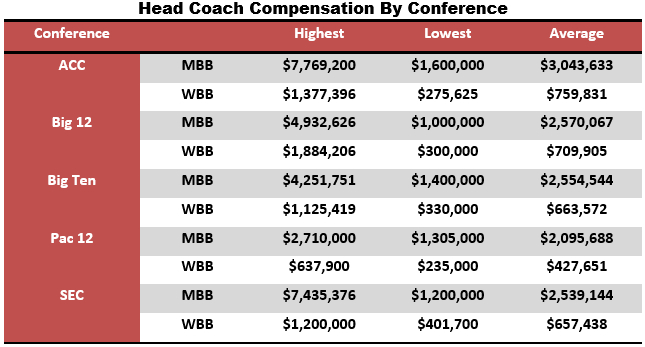
In today’s society, specifically in our sports industry, there is a serious issue with the gender pay gap with our coaches. In this blog, I will be specifically talking about NCAA Collegiate Basketball Coaches. This has been a topic of conversation for quite some time now, and yet, nothing has changed. As The Sport Digest said, in one of their recent posts, “An interesting but often overlooked area that is covered by Title IX legislation entails equitable pay of the coaches of men’s and women’s athletics teams at NCAA colleges and universities. Although the law is well intended, the facts clearly indicate that men’s coaches are paid much more than women’s coaches across the board and that colleges have found ways around the federal law.”
So this leaves me with the question on why are the pay gaps so staggering?
Chart from Google
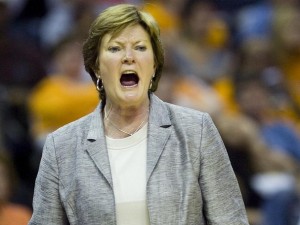
According to The Sport Digest, “If the salaries of outliers coaching women’s basketball teams such as Pat Summit at Tennessee and Geno Auriemma at Connecticut were removed, the median salary for women’s coaches would be even further behind those of men’s coaches.” Does this mean experience and awards matter when it comes to “total” salary?
Picture from Google
In all divisions of NCAA Women’s Basketball, female head coaches are making an appallingly lower than that of their male counterparts. How is this still possible?
To me and plenty of others, this is a serious matter regarding Title IX matter, but how long have we been saying this? Why can’t change be made?
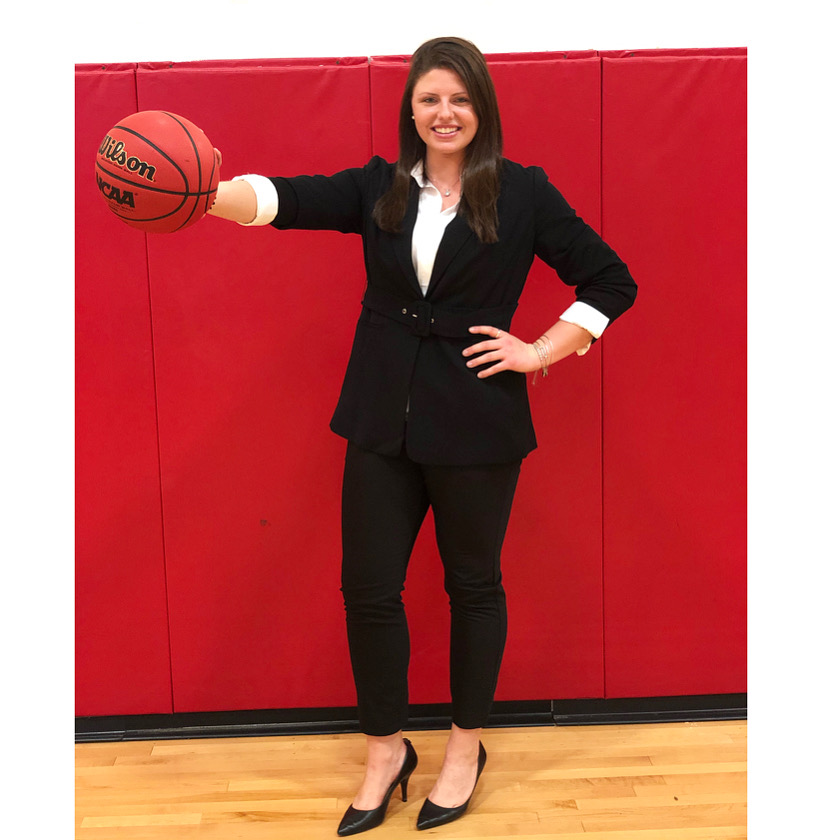
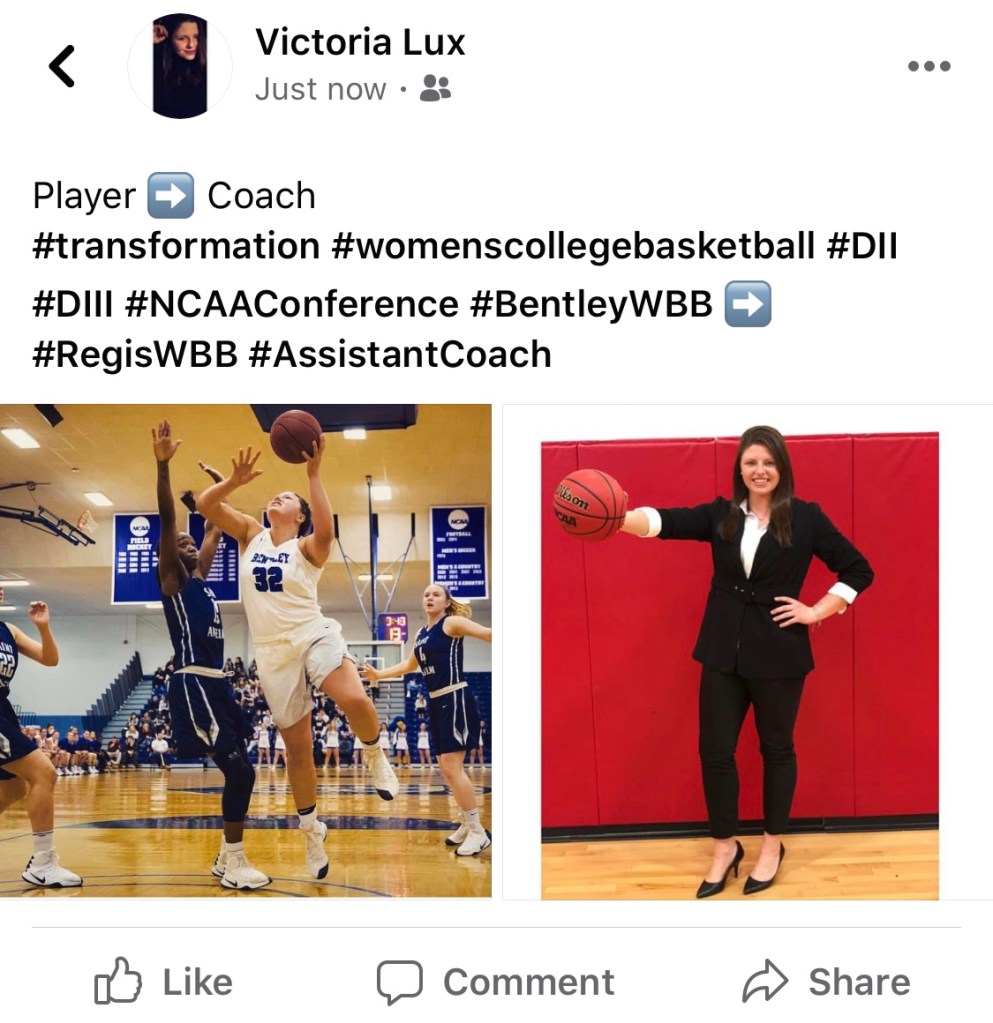
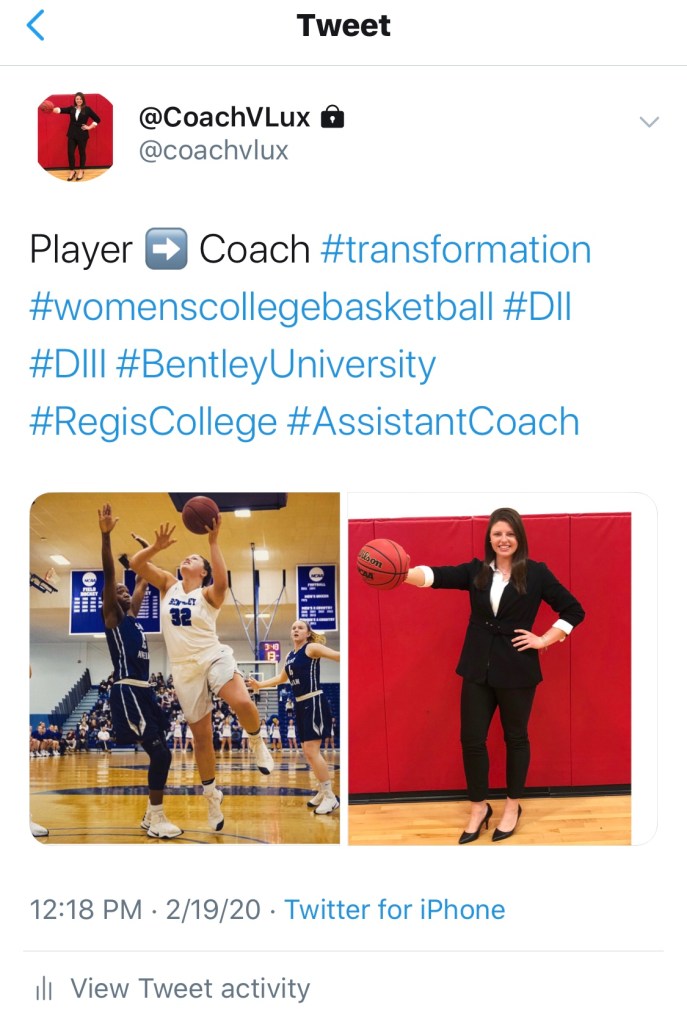
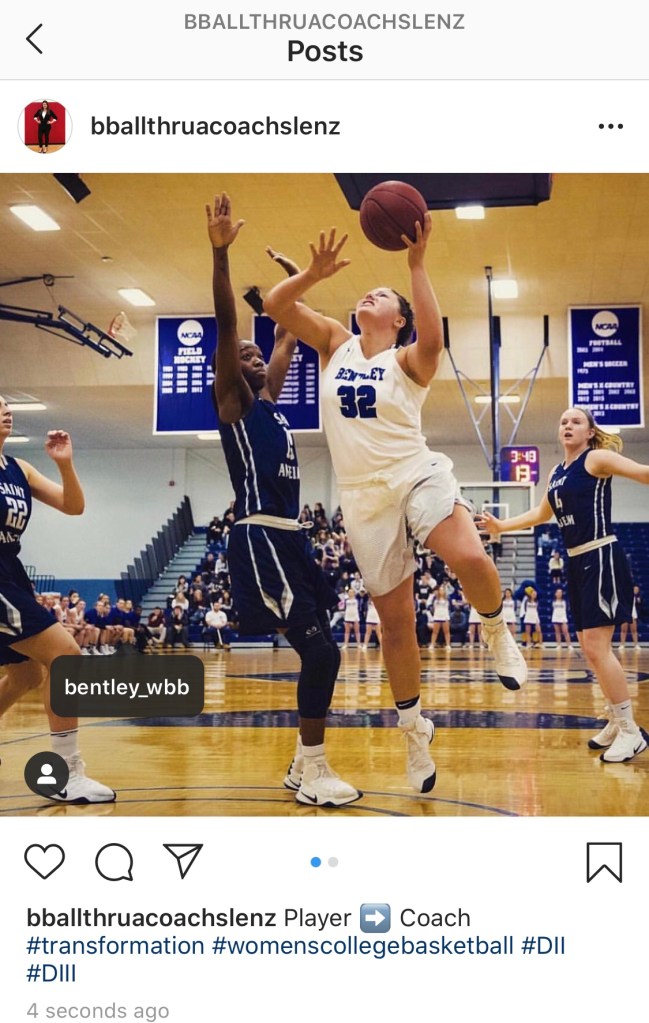
Ever since I was a young girl, I’ve had a basketball in my hands. And I can admit that I’ve looked up to several college and professional players. I had the opportunity to play Division II basketball on a full scholarship and am now in my first year as an Assistant Coach for a Division III Women’s Basketball team.
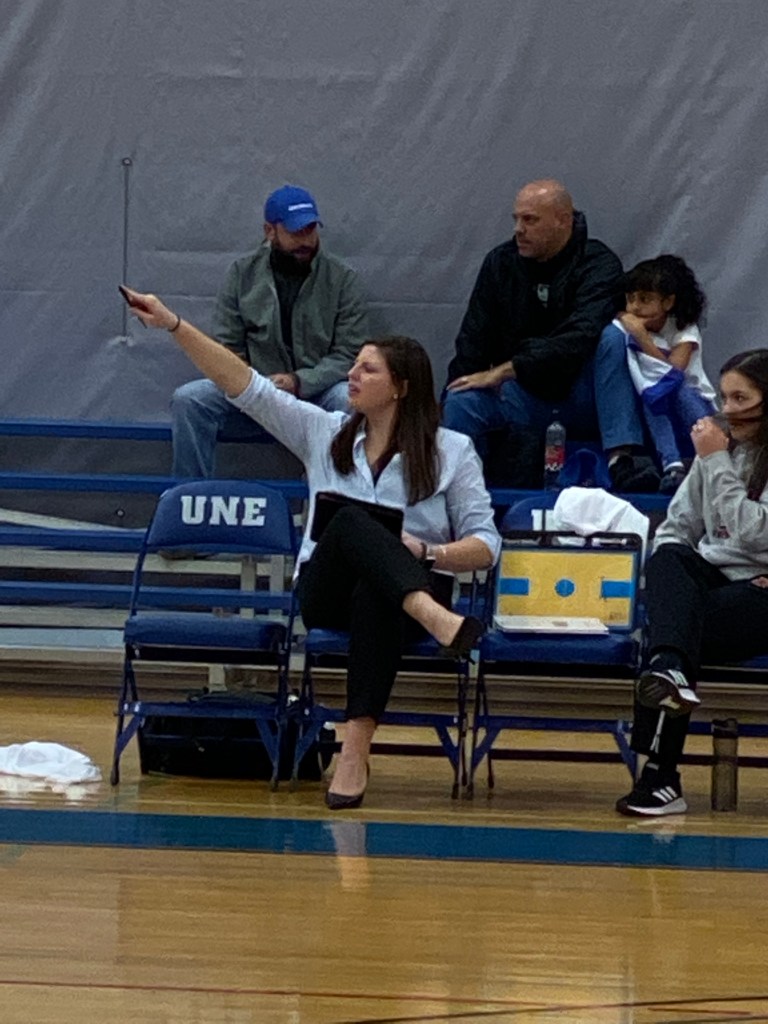
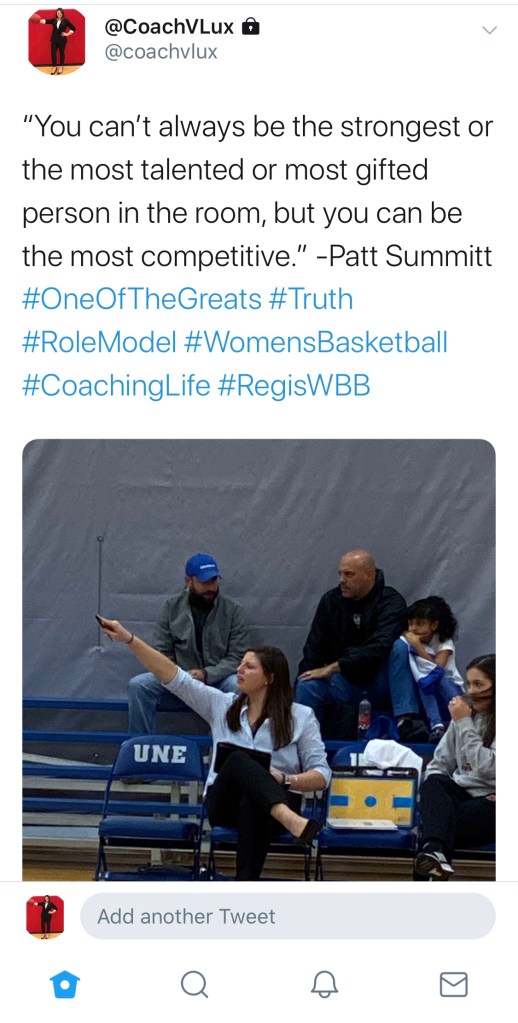
As an inspiring head coach myself, I’m very much in it and want to understand what the underlying issue really is. And honestly, I don’t want to be paid unfairly when my number is called.
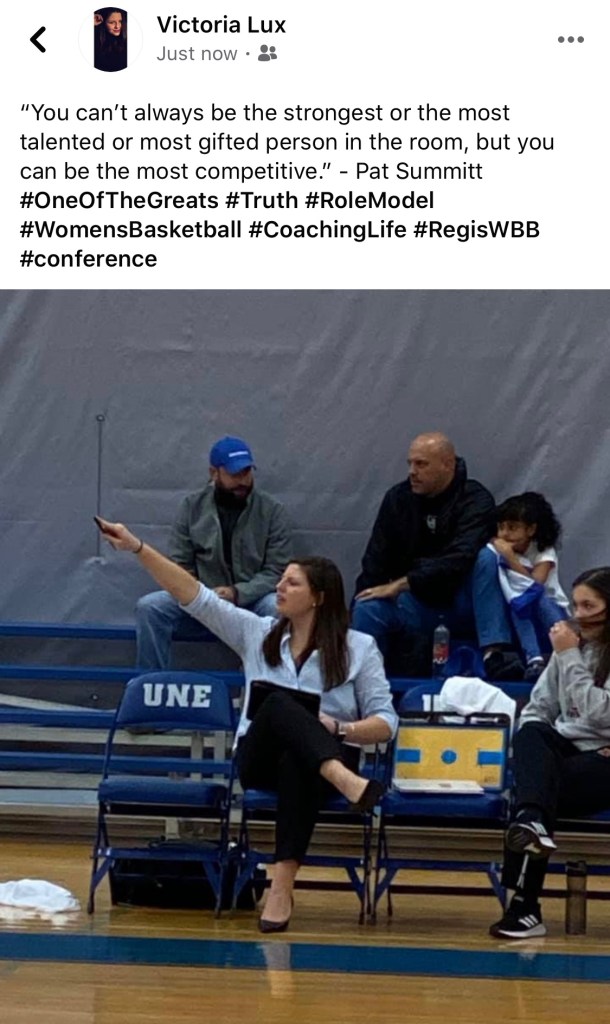
Picture by Sharon Lux
There are certain steps that are being made in the right direction. After taking a step back out of basketball, and looking at the big picture, Katie Sowers is the name to know.
Sowers has worked as hard as anyone else to become the ‘first female coach in the NFL’ and ‘first female coach to coach in the Super Bowl’.
“I’m not trying to be the best female coach, I’m trying to be the best coach. All it takes is one, and then it opens the door for so many”, as Sowers said.
She is now paving the way for others, while changing the direction and stigma that surrounds female coaches in male dominant professional and collegiate sports. Individuals, like Sowers, need to go after their dreams and not let numbers, people, politics, etc., stand in their way.
Check out the full preview, it’s a must see. Katie Sowers
Keeping with stepping in the right direction, for women coaches, check out this website #BossWomen Coaches in NBA. This site highlights how some of the former WNBA professional athletes are now stepping into the coaching role, along with some front office roles, in the NBA. Kara Lawson is the Assistant Coach for the Boston Celtics. Kristi Toliver is the Assistant Coach for the Washington Wizards. Becky Hammon is the Assistant Coach for the San Antonio Spurs. Swim Cash is the Vice President of Basketball Operations for the New Orleans Pelicans. And the list goes on.
If you have a passion to be a coach, go out and make it happen. When people ask you what you do for a living, you say “I’m a coach”, proudly. That’s what I do. There should be no “female” before the word coach. You are a coach. Period.
In the inaugural episode of Basketball Through A Coaches Lens, Regis College Assistant Sports Information Director Nick Gendreau and I discuss the gender pay gap between female and male head coaches in collegiate basketball, recruiting resources, and more.
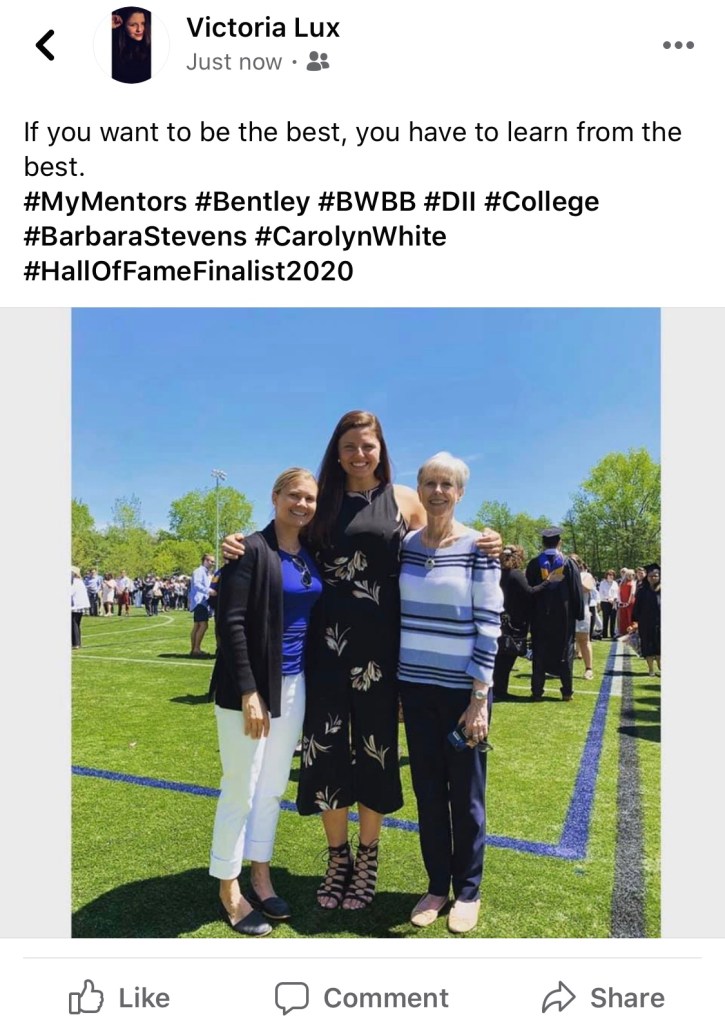
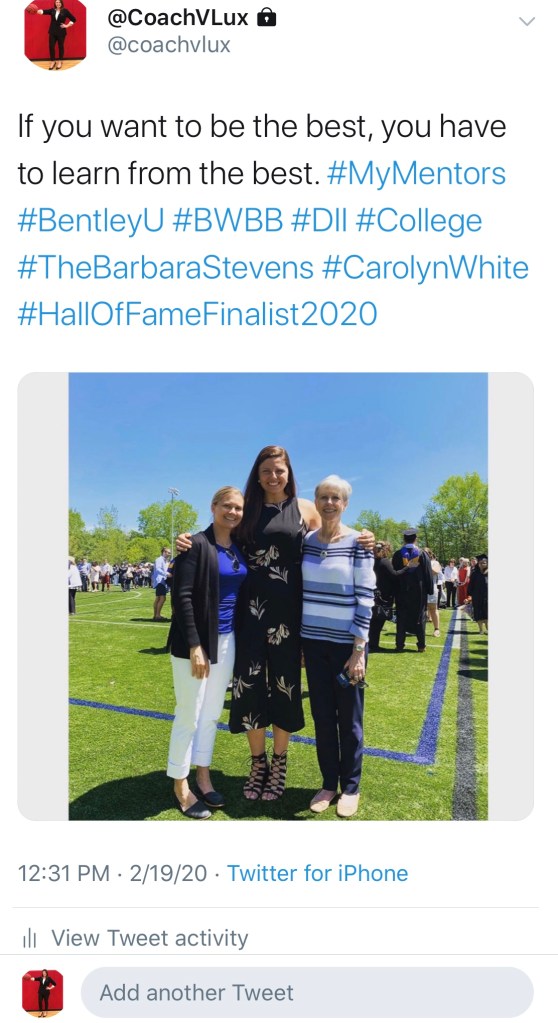
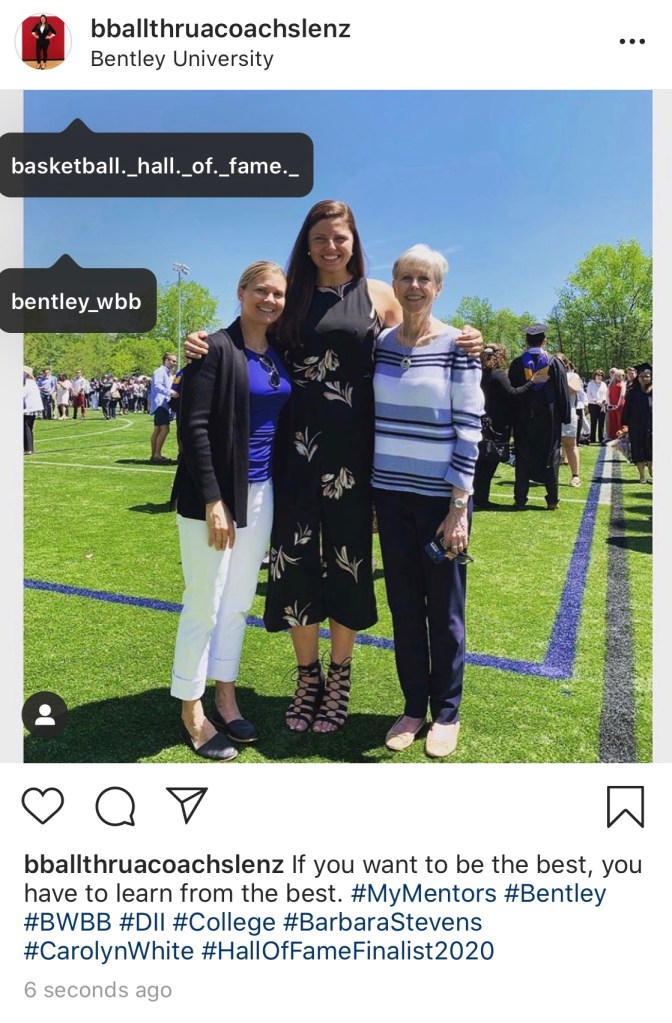
Basketball has been a part of my life for as long as I can remember. I can’t remember when a basketball was not in my hands when I was a kid. Basketball has shaped me into the person I am today. I worked hard to receive a full scholarship to play collegiate basketball at Bentley University for Head Coach Barbara Stevens, who is a 2020 Hall of Fame Finalist, along with Kobe Bryant, Kevin Garnett, and many other big names.
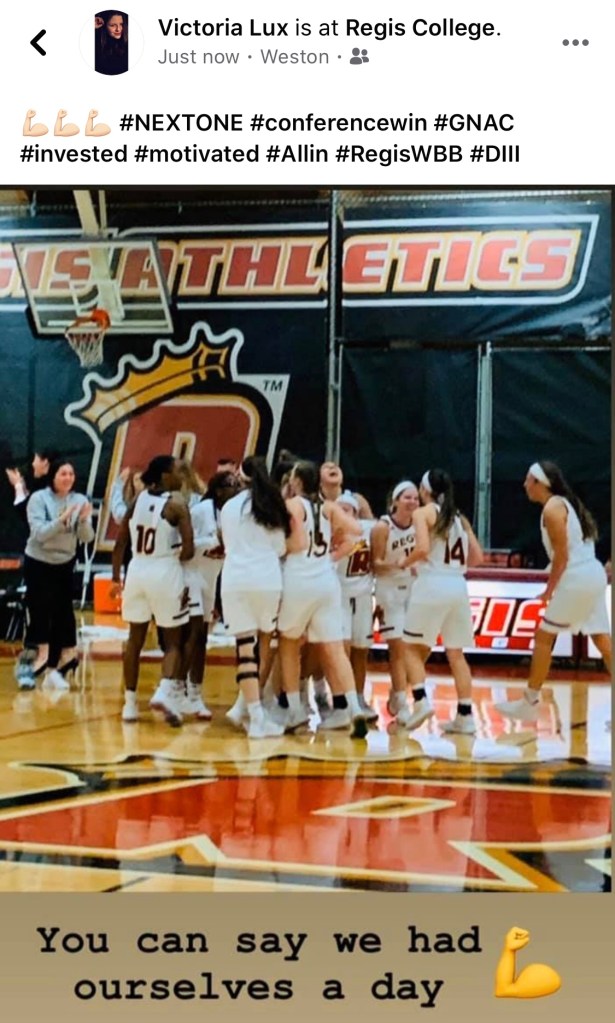
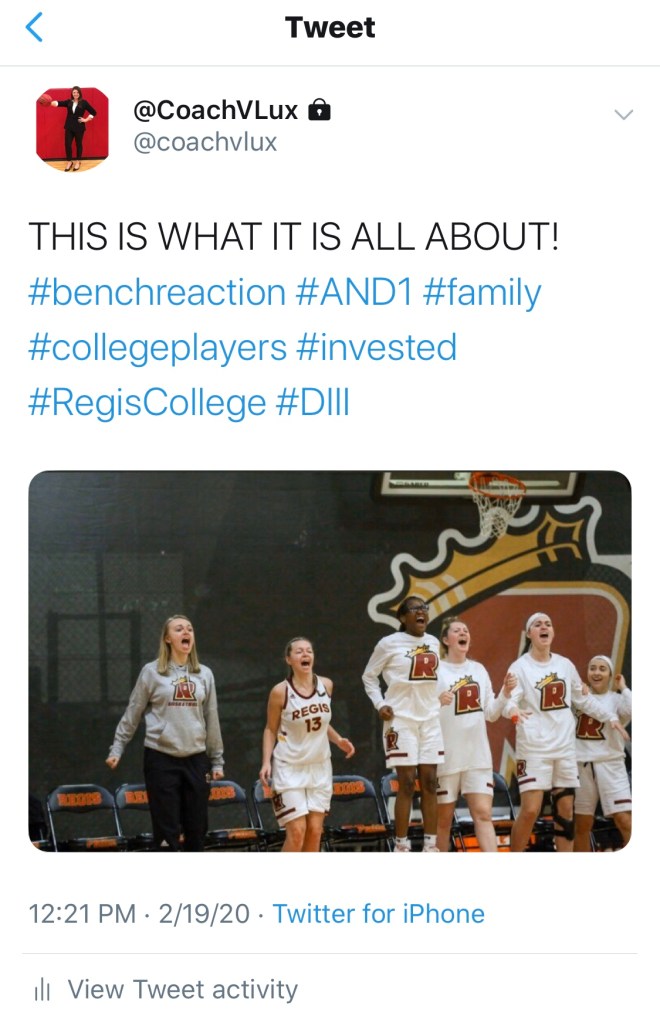
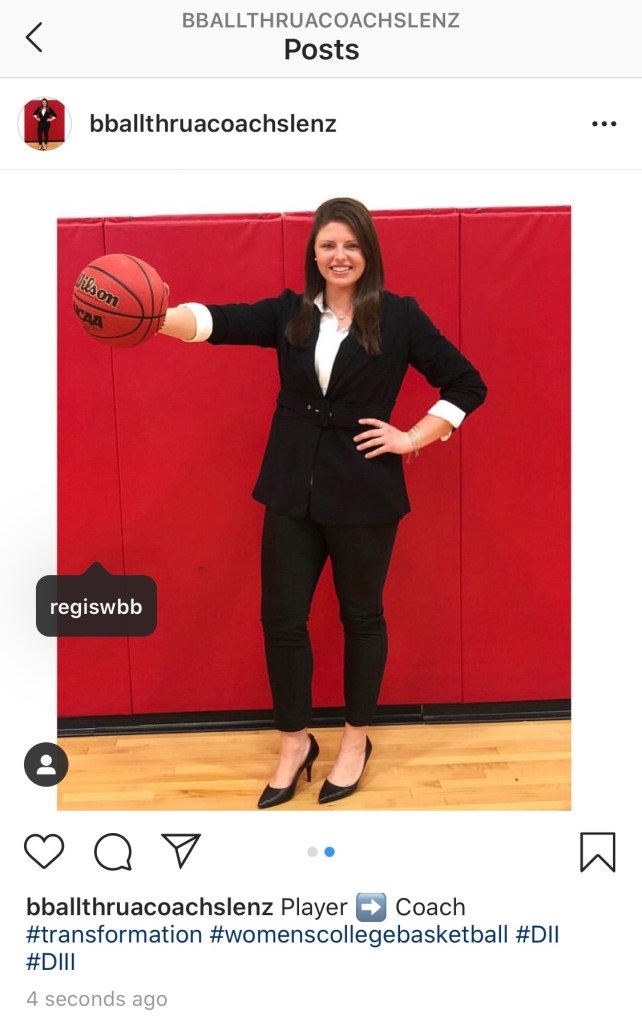
Currently, I’m in my first-year as the Assistant Coach of Regis College’s Women’s Basketball team. Regis competes at the Division 3 level and in the Great Northeast Athletic Conference (GNAC). It’s important to make the most out of this opportunity because I’m an aspiring Division 1 Head Coach.
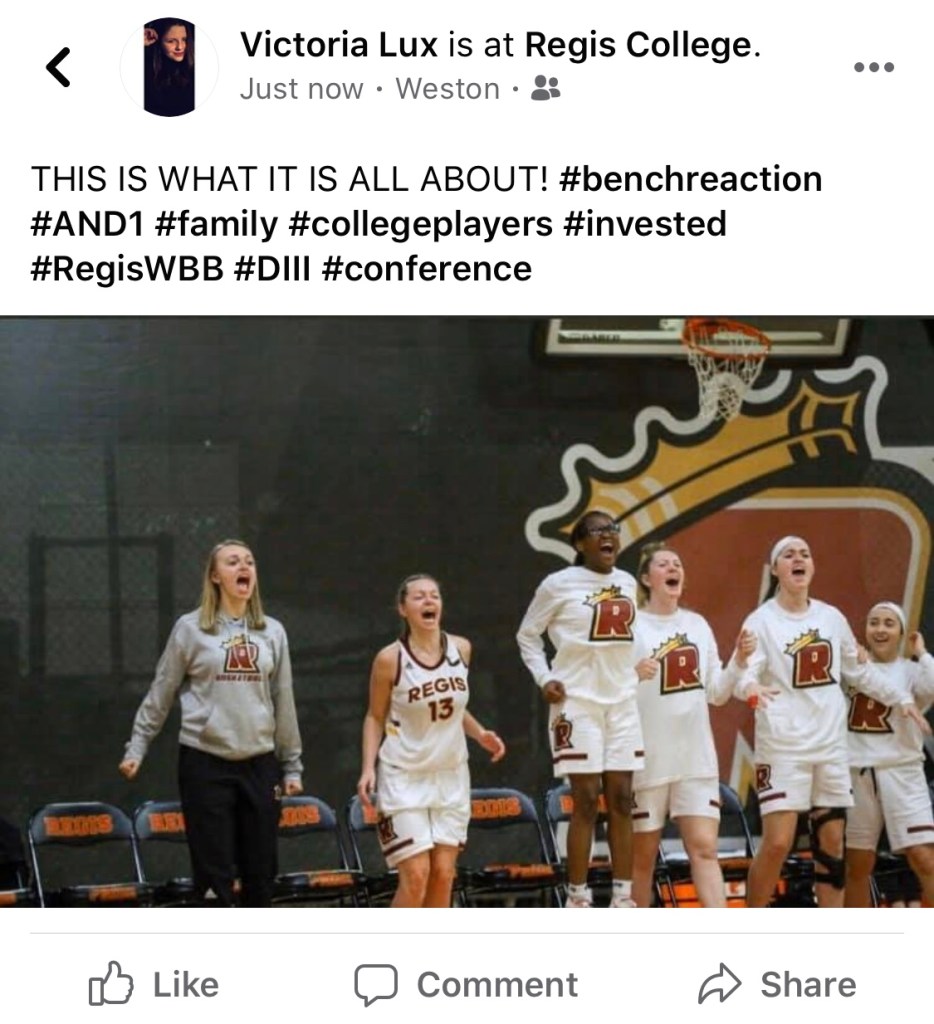
This video features my players demonstrating just how hard they work every day on the court. As their coach, my job is to help improve their skills and overall basketball IQ. Even though I’m in the coaching role now, I learn from them just as much as they learn from me. That’s the magic that comes from sports, being on a team, and being a part of a sports family.
The video above is a demonstration of hard work and dedication to the game of basketball. The Regis WBB team shows true motivation and determination, everyday, on and off the court. (VIDEO BY: Maria Krull)
This is an example post, originally published as part of Blogging University. Enroll in one of our ten programs, and start your blog right.
You’re going to publish a post today. Don’t worry about how your blog looks. Don’t worry if you haven’t given it a name yet, or you’re feeling overwhelmed. Just click the “New Post” button, and tell us why you’re here.
Why do this?
Because it gives new readers context. What are you about? Why should they read your blog?
Because it will help you focus you own ideas about your blog and what you’d like to do with it.
The post can be short or long, a personal intro to your life or a bloggy mission statement, a manifesto for the future or a simple outline of your the types of things you hope to publish.
To help you get started, here are a few questions:
Why are you blogging publicly, rather than keeping a personal journal?
What topics do you think you’ll write about?
Who would you love to connect with via your blog?
If you blog successfully throughout the next year, what would you hope to have accomplished?
You’re not locked into any of this; one of the wonderful things about blogs is how they constantly evolve as we learn, grow, and interact with one another — but it’s good to know where and why you started, and articulating your goals may just give you a few other post ideas.
Can’t think how to get started? Just write the first thing that pops into your head. Anne Lamott, author of a book on writing we love, says that you need to give yourself permission to write a “crappy first draft”. Anne makes a great point — just start writing, and worry about editing it later.
When you’re ready to publish, give your post three to five tags that describe your blog’s focus — writing, photography, fiction, parenting, food, cars, movies, sports, whatever. These tags will help others who care about your topics find you in the Reader. Make sure one of the tags is “zerotohero,” so other new bloggers can find you, too.





 Basketball Through a Coach's Lense